

Building High-Performance Online Stores for the Digital-First Indian Market
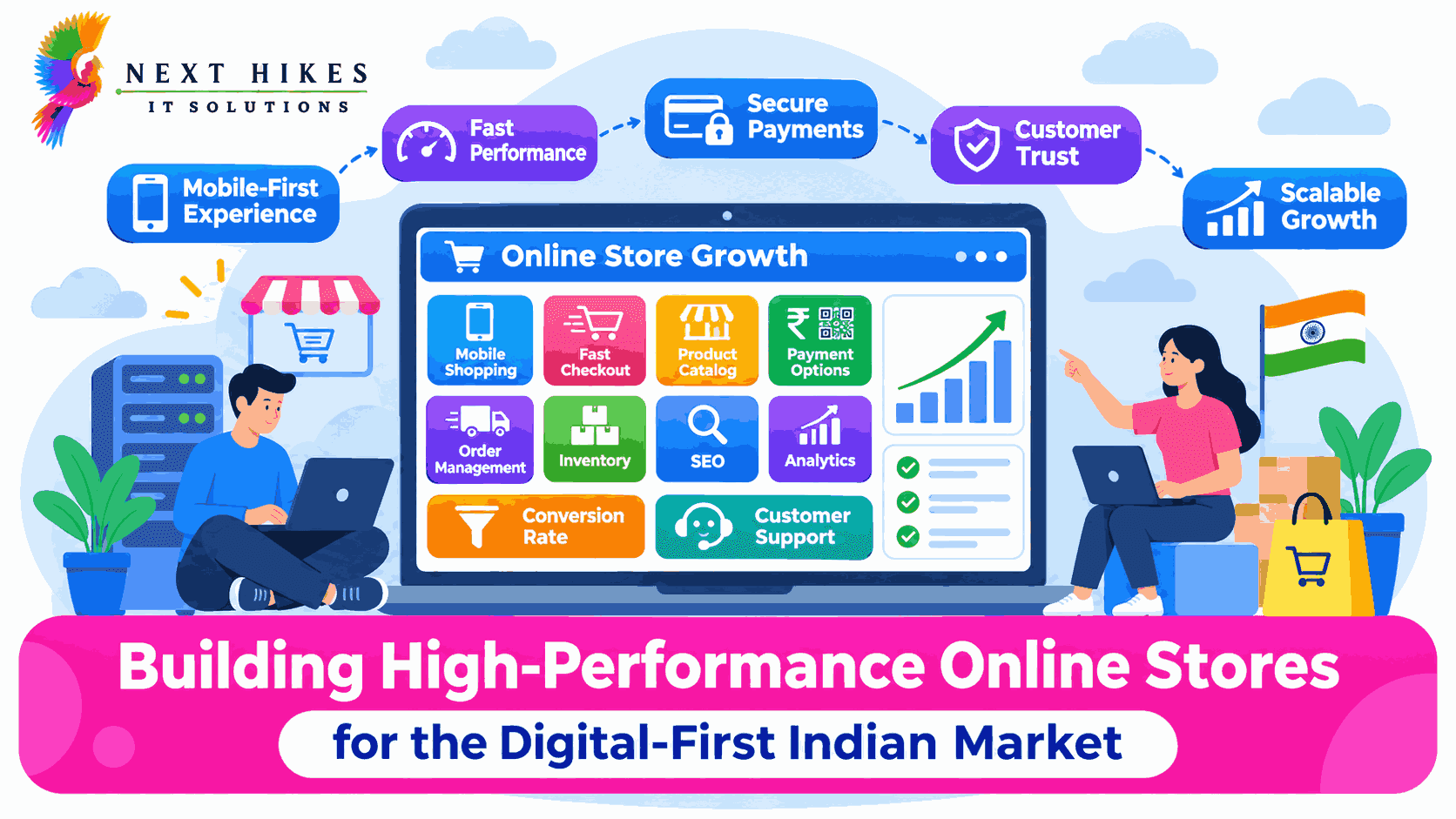
While an online presence may have once been a ‘nice-to-have’ option for businesses in India, now, the online shop is often the customers’ first interaction with your brand. As people can easily search for products on their mobiles, compare prices in seconds and are expecting a seamless purchasing experience, the quality of your online shop greatly impacts the quality of your business.
Creating a high performing e-commerce store means offering a quick, safe and enjoyable experience for Indian customers. In this blog we’ll guide you through what makes an e-commerce website successful in India and how you can confidently create one for your business.
Understanding India's Digital-First E-Commerce Market
With increased internet penetration in smaller towns and villages in India, more customers are being able to purchase products online. With cheap mobile phones, cheap mobile data and popular payment methods, customers in tier 2 and tier 3 cities can purchase products online that would previously only be found in larger cities.
Digital native businesses operate entirely through digital avenues. Their whole product offering, marketing strategy and relationship with customers is designed around digital channels. The product(s) offered, delivery process, support system and branding all consider customers purchasing online.
India is very diverse. Customers will speak different languages, have different budgets and preferred payment methods. If a store is suitable for one group of customers it may not be suitable for another. Understanding who you are targeting in your online store therefore forms the basis of your project.
Why High-Performance Online Stores Matter for Indian Businesses
Competition in the Indian e-commerce market is extremely high. With so many independent brands competing at the same time as large marketplaces, it is very easy for customers to tap away from your site. If a site is slow loading, confusing or difficult to complete purchases, you will likely lose customers quickly without understanding why.
Fast, intuitive and easy to complete purchases in your store will result in happy customers who come back. This means a strong brand reputation within customers, and better returns on marketing spend. Having a good storefront means small or developing businesses can become less reliant on 3rd party marketplaces and take more control over pricing, customer data and brand identity.
Essential Features of a High-Performance E-Commerce Website
Navigation should be easy for users to find products quickly. Each product page should include clear visuals, accurate descriptions, clear pricing, and clear details on delivery and returns. The search functionality should be accurate and allow for typos, due to many users typing quickly on mobile devices.
From a back-end perspective, inventory management, order handling and integration with logistics providers and accountancy systems is essential. Whilst it may be overlooked by many business owners initially, it is extremely important to provide an easy to use back-end admin system for the team. Overall, having well designed web development for your e-commerce site will mean having beautiful designs whilst also providing a smooth back-end process.
Mobile-First Design and User Experience
Many users in India shop through mobile devices. Therefore it is essential to ensure that your online store works efficiently on mobile devices. Mobile responsive means designing for mobile devices first and ensuring that larger screen versions are appropriate.
This means having large clickable buttons, easy to read text, easy to navigate menus and reducing the amount of typing required for customers during checkout. Keeping forms short, and using features such as address saving or autocomplete will significantly improve the user experience. Offering support for local languages can allow you to reach customers who do not feel as comfortable using English. Overall creating a good mobile experience shows customers that you value their time. As a result of this, many people will be more likely to complete a purchase.
Website Speed and Performance Optimization
Speed is an important factor in online retail. Often consumers will be using mobile networks of varying speeds and may become frustrated if pages take a while to load. Slow performance in your online store leads to cart abandonment and poor SEO.
Improving speed on an e-commerce site can be done simply. Compressing images (without affecting quality) and removing any redundant scripts from pages. Prioritising content so that users can see important information quickly can improve speed. Content Delivery Networks mean page content can be delivered to users from locations closer to them. This is very beneficial in large countries such as India. It is important to regularly test speed as over time adding new products, plug ins and promotions can cause the website to run slower.
Secure Payment Integration for Indian Customers
Offering multiple payment options will help you cater to more people for purchasing from your store. The common payment options used by customers in India are UPI, Debit/Credit Cards, Net Banking, Digital Wallets and Cash on Delivery. Offering too few payment options may mean that people who wish to pay in a different way may be lost.
Ensure that your reliable payment gateway includes the payment options popular with your target market. It should be simple and quick. To ensure security, stores should adhere to good data protection practices, have HTTPS encryption, and make sure that they work with trusted payment providers. Cardholder details shouldn’t be handled directly by businesses. You should be aware of any rules and guidelines relating to digital payments and data of customers within India. If customers can pay using familiar payment methods in a secure checkout, trust in the business increases.
Personalization and AI in E-Commerce
Personalised features within an online store help customers feel understood. This can be done by suggesting similar products, reminding customers of previous searches or abandoned baskets, and using AI to recommend based on browsing data.
Most businesses in India will benefit from starting with simple personalisation features to improve engagement. Suggestions and intelligent search features help to engage customers, with chatbots helping to answer simple order/delivery queries so that you can have more in depth conversations with customers. You do not need to provide high tech features to impress people, just make shopping easier and relevant to them.
Scalable Technology and Cloud Infrastructure
Having a large number of users visiting your e-commerce site (thousands) on a peak sale period may be an issue if your site isn’t set up correctly. With many big sale periods throughout the year in India, peak times can create traffic surges.
By using a cloud-based solution you can scale up resources to match increased demands, paying only for what you use. If you have a flexible infrastructure early on it will make adding extra features, payment methods and sales channels much easier in the future. Taking backups, monitoring and having a plan in place for recovery will ensure your business is protected from any unexpected outages. While “scaling” may seem like it means building a very large system from the beginning, it really means that as it grows, you aren’t forced to completely start from scratch.
SEO and Digital Visibility for Online Stores
This ensures the correct people see your products. SEO is a very effective way of generating consistent, relevant traffic.
Ensure that your pages are easy to navigate, and categories clearly defined. Product pages should have unique page names, easy to understand content and descriptive alt text on images. Good page speed and a mobile friendly website will help improve your ranking. Giving content around buying guides, how to care for items, and FAQs will help to gain authority on the page and also attract customers who may be unsure. As many customers in India search in multiple languages, considering local search behaviours can make additional opportunities available. SEO should be an ongoing effort. It is generally more rewarding to consistently improve SEO rather than take quick route options.
Building Customer Trust and Improving Conversion Rates
Build trust in your webstore by including clear contact information, fair return/refund policies, real customer reviews, and clear security indicators. Be realistic about delivery times and make it easy for customers to track the status of their order.
Make checkouts easy and simple. People may leave their basket if they encounter unexpected costs during checkout. Forcing users to create an account or creating a complicated checkout process can also cause cart abandonment. However, by offering quick customer support via popular platforms (e.g. chat and phone) you can convert those undecided users. Using feedback, and making small improvements to your store over time will allow you to continuously improve your store, rather than making assumptions.
The Future of E-Commerce in India
As technologies develop and customer expectations change, the Indian e-commerce industry will continue to evolve. Customers can search via voice, browse via video, have experiences in local languages, and make easier digital payments. Discovery is increasing on social media, and customers are expecting seamless experiences across web, app and messaging channels.
By being agile businesses can be more adaptable. This can be achieved through scalable technologies, understanding customers’ needs, and having an ongoing approach to improving within your store.
Conclusion
To perform well in India's digital environment, you must ensure your web store has mobile responsiveness, quick loading speeds, secure payment systems, scalability and put customer trust at its core. All of these aspects work together to provide your customers with excellent shopping experiences, encouraging repeat custom.
Understanding your customers and selecting the best solution for your goals and budget will allow business owners and entrepreneurs to create web stores in a way which best suits them. With good planning and collaboration with a dependable technological partner, creating web stores will provide solid foundations for sustainable growth in the growing digital market within India.

Harsh Gupta
Sr.Digital Marketing ExecutiveWith 3+ years of experience in digital marketing, specializes in SEO, social media marketing, paid campaigns, and brand growth strategies. Skilled in creating result-driven marketing campaigns that improve online visibility, audience engagement, and lead generation. Passionate about helping businesses grow through innovative digital solutions, performance marketing, and data-driven decision-making. Known for delivering creative strategies, strong communication, and measurable business results.
Related Articles
More from the world of Digital Market
Why Every Small Business Needs a Digital Marketing Plan for Sustainable Growth
Plan smarter, grow your business
 Harsh Gupta
AI-Assisted Coding and Modern Development Workflows: A Practical Guide
AI-assisted coding is transforming modern software development by improving productivity, simplifying coding tasks, and streamlining workflows. Discover how AI coding tools help developers write, debug, test, and optimize code while combining automation with human expertise.
Harsh Gupta
Android vs iOS App Development: Which Should Businesses Choose?
Compare Android and iOS app development to understand their costs, features, security, and benefits. Discover which platform best suits your business goals and target audience.
Harsh Gupta