

Android vs iOS App Development: Which Should Businesses Choose?
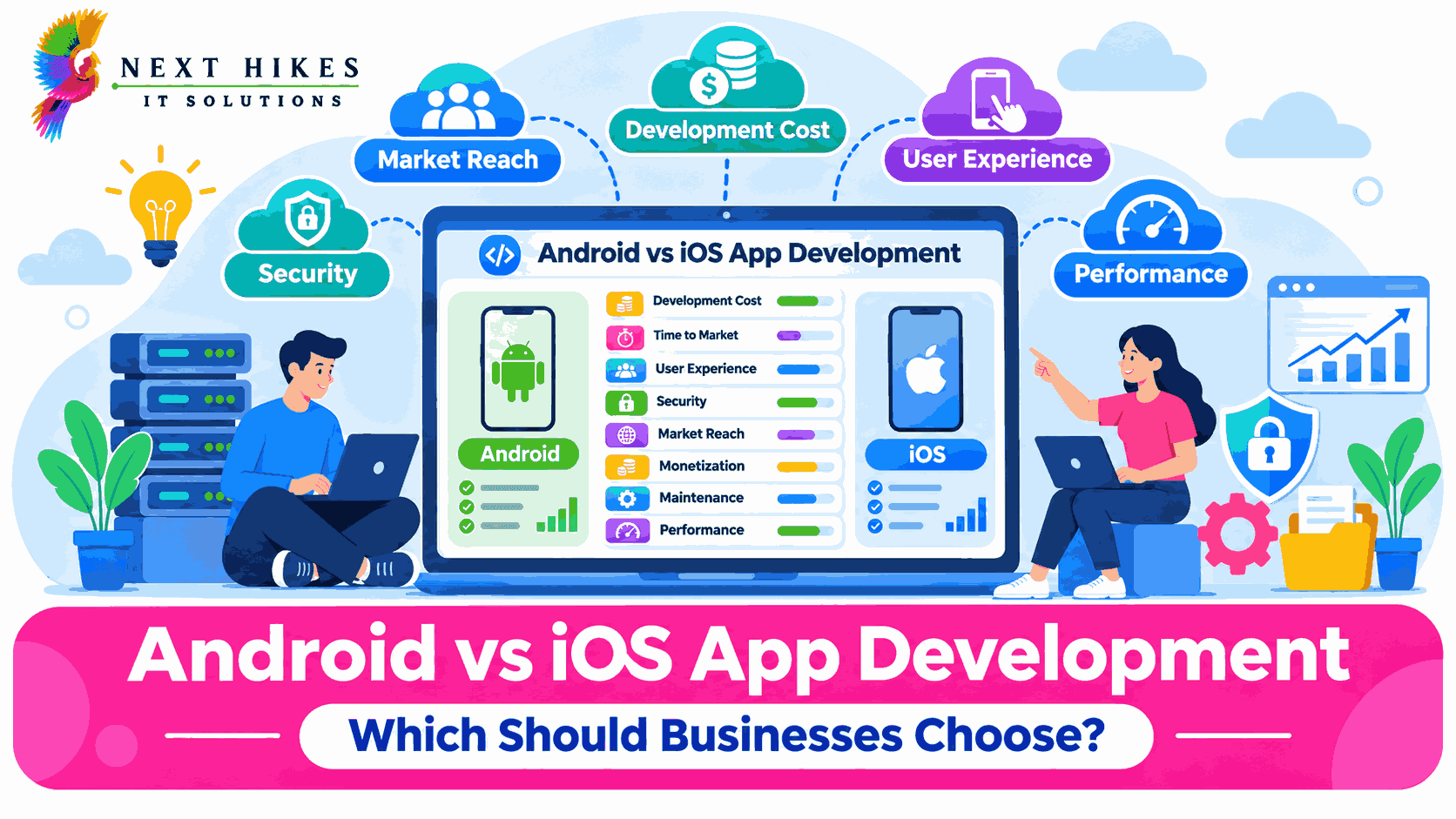
The reality is your customers will often be spending time on their mobile devices. A good app allows you to interact with them on the most appropriate times. But how do you decide to create for Android, iOS or both?
This guide takes a look at the costs, time frames, security, accessibility and reach associated with creating Android or iOS apps. So you can make the decision based on your business goals. Mobile apps are no longer a luxury but something every business can benefit from. They can improve sales, increase customer service, help with loyalty programs, internal processes and improve brand trust. With the demand for Android and iOS apps increasing in many industries, it’s becoming an actual business decision to choose which platform to go down. If you choose the wrong one then you may end up having to pay for an app that you won’t actually get your customers to use. Or you may have to wait to release your app when you need to change the app to target another platform. There isn’t one clear winner here. It really depends on who your users are, what your app needs to do and how much money you can invest.
Understanding Android and iOS App Development
Before comparing the two platforms, it helps to understand what each one is and how apps are built and distributed on it.
What Is Android App Development?
Android is an open source mobile operating system created by Google. It can run on various different devices from different manufacturers. This is one of the main advantages of Android but can also mean extra testing for development teams. The majority of android apps are written in Kotlin (what Google recommend using for new projects) or Java. The majority of apps are distributed via Google Play Store however there are other options available to use. This increases flexibility for businesses.
What Is iOS App Development?
iOS is an operating system created by Apple that is only available on Apple products, like the iPhone and iPad. As the company owns both the hardware and software, there is a much smaller selection of devices available compared to Android. Most apps are created using Swift, Apple’s modern programming language, but older projects will still use Objective-C. Apps can be published on the Apple App Store which has strict guidelines on how they should be designed, their privacy and how they will be reviewed.
Android vs iOS App Development: Key Differences
Both platforms can deliver excellent apps. What separates them is the way apps are built, tested, and published, and those differences have a direct effect on cost and timeline.
Development Cost and Budget
There is no automatic price difference between the two platforms. However, there can be some factors that will influence your budget. The complexity, features, 3rd party integrations, design requirements and testing of your application will all affect how much you pay. However, there are a few considerations when choosing between Android or iOS. With Android, there are many different devices and screen sizes to consider so testing could be more work. Whereas iOS has limited device variations. When designing your iOS applications, you will be expected to stick to Apple standards meaning there could be more work on fine-tuning. Android apps have Material Design guidelines and therefore there is a little more flexibility. Your team’s skills will also play a part. Kotlin developers and Swift developers will have different skills and will also vary in price depending on location and experience. Both platforms regularly release updates to their operating systems meaning you should expect to have regular maintenance.
Development Time and Complexity
Generally speaking, the length depends on the scale of your project. A simple app with basic functionality might be similar in development time for both platforms but if you are making a complex app with payment functions, advanced real-time functionality, or integrations then it will take longer. It is also important to note that building 2 native apps will take more overall work as you will need to build a separate codebase for each platform. If you really want to get your product to market quickly, consider building an MVP for one platform or using a cross platform solution.
User Experience and Interface Design
Android and iOS have very different navigation expectations and user interactions, so you will find that your app won’t quite feel right when developing for both platforms. Apple provide very thorough Human Interface Guidelines and Google provide Material Design. By following the correct guidelines for each platform it makes users feel more at home and therefore less friction in their daily interactions with the app, improving engagement and retention.
Security and Data Privacy
Both platforms have robust security features included such as sandboxing, permissions and encryption. Both have good security due to Apples closed ecosystem and Google play. However, the security of the app will depend on how it is coded, whether data is stored securely, if APIs are designed securely, if there are regular updates and if there has been extensive testing. An app developed using best practices on either platform provides a much more secure environment than an app that has been developed without care.
App Store Approval and Publishing
Both of these stores require reviewing of apps and have their own policies to follow. Most commonly the Apple App Store will have a more detailed review process so businesses need to ensure they leave enough time for feedback and potential re-submission. Google play has policies and requirements to follow but also provides staged releases and testing tracks to allow a slow release. It is wise to read through guidelines for whichever store you are targeting. Designing your app with the guidelines in mind will avoid any last minute hold-ups.
Android vs iOS: Market Reach and Target Audience
The most useful question is not which platform is better, but which one your customers actually use. Market share varies widely by country, age group, and industry, so it is important to check data for your own market before deciding.
Android’s Global Market Reach
Android is available on a large variety of devices, meaning it's commonly used across many regions (including many emerging markets). Often you'll find that if your customer base covers multiple countries and/or markets with price sensitivities then Android will provide more accessibility. You may also have to consider developing your app to support a wide range of device screen sizes, hardware specs and OS versions due to the range of manufacturers available.
iOS’s Premium User Base
iOS is a powerful platform with a big market share in areas like North America, Western Europe and certain regions of Asia-Pacific. Many businesses will find that iOS users interact with paid apps, subscriptions and in-app purchases. However, it really depends on your product and audience. An android app can be just as effective if it targets the correct audience.
What Is Cross-Platform App Development?
Cross platform mobile apps allow you to create one application using mostly one codebase to run on Android and iOS. These can be made using two popular frameworks. Flutter is a framework developed by Google which allows you to create custom and consistent UIs. React Native is a JavaScript based framework developed by Meta, which is popular amongst teams who have existing web development skills.
Benefits of Cross-Platform Development
The key benefit of using shared code is that it reduces duplication of efforts. This often means only one team needs to be managing both versions. New features and improvements can be released to Android and iOS users simultaneously. Customers will have a consistent experience with your app. However, this will depend on your project. On many apps you will see some savings, but this depends on how complex your app is.
How to Choose the Right App Development Platform for Your Business
When choosing the right mobile app development platform, it helps to think logically. By looking at your audience using website analytics, customer data and market research, you can get an idea of what devices your customers are using and where they’re based. This can give you a better idea over your assumptions.
Next you’ll want to think about your budget. It’s a good idea to know what your budget is going to be for the complete lifecycle of your app. You can compare the costs of having one native application, two native applications or a cross platform solution. Once you know your budget, you should also know exactly what is required for your app. If there are certain features that are essential to your app, plus integrations and device capabilities then it might be worth looking at native development if you’re using advanced hardware or heavy graphics.
Security & scalability should also be considered. How will your application deal with user data, payments and compliance? Will you be able to scale your application as your users increase? Both platforms will require regular updates to keep up to date with new OS versions and devices. Your budget should include support, fixing bugs and improving features once your application is live.

Harsh Gupta
Sr.Digital Marketing ExecutiveWith 3+ years of experience in digital marketing, specializes in SEO, social media marketing, paid campaigns, and brand growth strategies. Skilled in creating result-driven marketing campaigns that improve online visibility, audience engagement, and lead generation. Passionate about helping businesses grow through innovative digital solutions, performance marketing, and data-driven decision-making. Known for delivering creative strategies, strong communication, and measurable business results.
Related Articles
More from the world of App Development

Importance of UI/UX Design in the App Development Process
Better Apps Through Great UI/UX Design
 Harsh Gupta
On-Demand App Development: Process, Features, and Business Benefits
On-demand app development helps businesses deliver fast, convenient, and real-time services through mobile applications. This blog explores the development process, essential features, technologies, costs, and business benefits. It also highlights common challenges and tips for choosing the right development company to build a scalable, secure, and user-friendly app.
Harsh GuptaDo You Have Any Questions?
Before launching any application or platform, there are always key questions to consider. Here are some of the most common ones we address.
Neither is better in every case. The right choice depends on where your customers are, which devices they use, your budget, and your app's requirements.