

Android App Development 2026 Trends for Developers: Know How AI Copilots, Smart Chatbots, and Tools Are Enhancing Their Work
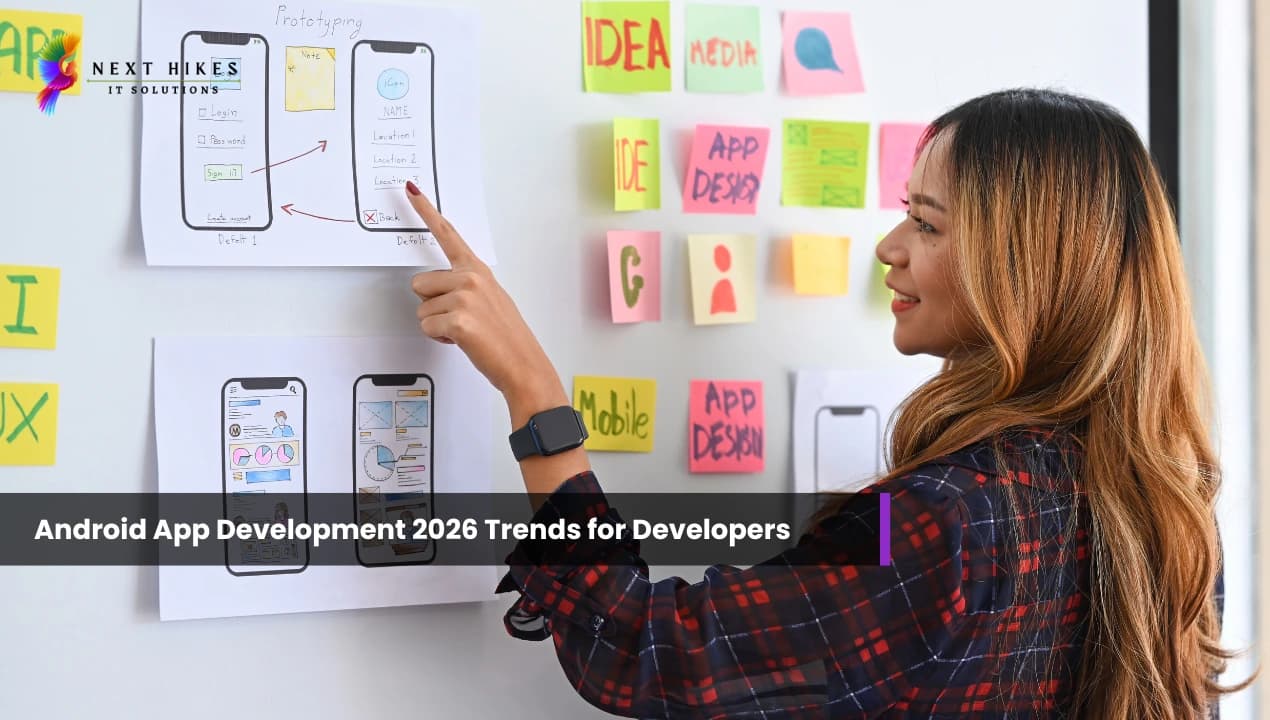
The upcoming time of technology is running on advanced Android app development, where intellect, speed, and innovation are gathering like never before. Android app builders are no longer just writing code; they are organizing inventive experiences stimulated by Artificial Intelligence, Generative AI, Edge AI, and no-code environments.
From AI copilots to smart chatbots, voice-based assistants, and speedy UI/UX design methods, the Android ecosystem is enduring a radiant shift for app developers or app planners. Anyone can get a clear understanding of these concepts by utilizing the Best App Development Services in Noida or somewhere else.
In this blog, you can explore the ultimate strong Android app development trends for app developers or app builders in 2026, explaining how modern forms and AI-led workflows are improving output, imagination, and efficiency.
Why Android App Development Looks Different in 2026
In 2026, users expect Android apps to be:
-
Smart and informal
-
Lightning-fast and offline-led
-
Elegantly designed and intuitive
-
Personalized and secure
To meet these hopes, developers are accepting AI-led development practices, automatic workflows, and smart design patterns. The result? Faster incident eras, minority bugs, and richer user knowledge.
1. AI Copilots: The New Coding Partners for Android Developers
One of the ultimate radical currents in Android app growth in 2026 is the rise of AI Copilots. These smart helpers work honestly inside IDEs, helping developers draft, refactor, test, and optimize code.
-
How AI Copilots Improve Developer Output
-
Develop Kotlin and Java code snippets directly
-
Plan advanced logic and best practices
-
Auto-discover bugs and safety issues
-
Create unit tests and proof
AI copilots are no longer possible tools; they are becoming important output multipliers, allowing developers to focus on construction and change rather than repetitive tasks.
2. Smart Chatbots Used Inside Android Apps
Chatbots in 2026 are better, fact-led, and fully integrated into Android use. Led by Gen-AI, these chatbots give human-like dialogues and provide real-time help.
Use Cases of Smart Chatbots in Android Apps
-
Customer support mechanization
-
In-app counseling and onboarding
-
E-commerce brand recommendations
-
Healthcare and wellbeing helpers
Developers immediately design chatbots as gist app features, not add-ons, making apps more attractive, mutual, and memory-compelled.
3. AI-Based Voice Helpers: The Rise of Voice-led Android Apps
Voice technology will have matured efficiently by 2026. Android builders are mixing AI-located voice assistants that allow users to check apps hands-free.
Why Voice Helpers Are Trending
-
Seamless approachability
-
Swifter user interplay
-
Multilingual support
-
Strengthened personalization
From voice-led investment apps to compatibility, travel, and output tools, voice-first Android apps are forming the future of refined consumer interplay.
4. Generative AI (GenAI) in Android App Development
Generative AI is redefining how Android apps are built and knowledge. In 2026, GenAI assists planners throughout the complete lifecycle, from ideation to arrangement.
How GenAI Is Used by Android Developers
-
Auto-produce UI parts
-
Designing active content inside apps
-
Personalizing user journeys
-
Enhancing advice engines
GenAI transfers static apps into living, adjusting systems that progress with consumer action.
5. Edge AI: Faster, Better, Offline-Ready Android Apps
Edge AI is a game-changeful current for Android development in 2026. Instead of relying only on the cloud, AI models immediately run precisely on Android devices.
Benefits of Edge AI for Developers
-
Ultra-low latency
-
Offline functionality
-
Improved data solitude
-
Reduced cloud costs
Edge AI capacities feature like real-time representation acknowledgment, predicting, classifying, and instant voice processing, making apps faster and more trustworthy.
6. Less Code and Simple Systems Helping App Developers
Zero-code and less-code policies are not an alternative for app developers, but they are authorizing work bureaucracy. In 2026, Android app builders use these plans to fasten prototyping and MVP growth.
Advantages of No-Code Systems
-
smart app structures
-
Faster and more appealing display
-
Easy unification with APIs
-
Reduced incident overhead
App Developers now focus on complex systems while allowing no-code forms handle so many repetitive UI and system elements.
7. Modern Smart App Design: UX/UI Takes Center Stage
In 2026, UX/UI design is no longer almost aesthetics; it is about data and despair. Android apps are devised to meet consumer needs and adapt in real time.
UX/UI Trends in Android Apps
-
AI-led layouts
-
Dark trend and adaptive ideas
-
Gesture-located exploration
-
Emotion-knowledgeable interfaces
Modern smart app design guarantees that Android users feel easy, tasteful, and charming.
8. Quick Design Patterns and Rapid UI Frameworks
Speed is entirely in 2026. Developers are adopting smart design patterns and current UI structures to build adaptable Android apps faster.
Popular Design Approaches
-
Modular UI parts
-
Jetpack Compose-based layouts
-
Reusable design plans
-
AI-led smart wireframes
These patterns reduce incident time while ensuring regularity and performance across devices.
9. Smarter App Testing and QA Using AI
Manual experiment is declining fast. AI-compelled testing forms now:
-
Simulate an honest consumer nature
-
Find edge-case bugsAct continuous testing
-
Improve app efficiency
Android builders in 2026 depend on AI-led QA structures to give fixed, superior apps with confidence.
10. Security-First Android Apps Powered by AI
With rising cyber warnings, protection is a top priority. AI enhances Android app protection by:
-
Detecting doubtful performance
-
Preventing scams in real time
-
Protecting user data
-
Automating protection audits
This form of Android apps is more reliable, better, and more reliable.
11. Super Apps and Ecosystem-Based Development
Android builders are building excellent apps that integrate diversified services, payments, messaging, buying, and analytics into a single platform.
AI plays a key part in directing complexity, personalizing occurrences, and measuring features easily.
12. Career Impact: Why Developers Must Adapt in 2026
To stay appropriate, Android developers must master:
-
AI copilots and GenAI tools
-
Voice and chatbot unification
-
UX/UI acumen
-
Edge AI arrangement
-
No-code cooperation
Those who fit will solve high-paying parts, global moment, and leadership roles in the Android environment.
Growth of the Future of Android App Development Beyond 2026
Looking back, Android apps will enhance:
-
Self-governing and self-knowledge
-
Emotion-aware and conversational
-
Fully embodied in real time
-
Seamlessly joined with smart designs
Developers who deal with today’s currents will shape tomorrow’s digital experiences.
Sum-Up | All You Need To Know
Android app development is no longer a big task; it has become an interesting task that can be completed within a few hours, as AI is leading the innovation of technology.
You can look in the market business are using AI copilots coding for app builders, smart chatbots improving engagement, and voice assistants to enhance the workflows without hampering other tasks.
For app or web developers, this is not just a current shift; it is a rebirth. Deal with AI, master smart tools, perfect UX/UI skills, and build apps that don’t just function, but think, readjust, and motivate. The Android ecosystem is developing fast, and those who develop with it will lead the digital globe forward.

Harsh Gupta
Sr.Digital Marketing ExecutiveWith 3+ years of experience in digital marketing, specializes in SEO, social media marketing, paid campaigns, and brand growth strategies. Skilled in creating result-driven marketing campaigns that improve online visibility, audience engagement, and lead generation. Passionate about helping businesses grow through innovative digital solutions, performance marketing, and data-driven decision-making. Known for delivering creative strategies, strong communication, and measurable business results.
Related Articles
More from the world of Software development
Business Software Development: The Complete Guide to Custom Software Solutions for Modern Businesses
Business Software Development enables organizations to automate processes, improve efficiency, and manage operations through customized digital solutions. This guide explains the benefits of custom software, ERP systems, software integration, and the latest trends helping businesses achieve sustainable growth in 2026.
 Harsh Gupta
Top 10 Qualities of the Best Software Development Company in 2026
Choosing the right software development partner can significantly impact the success of your digital initiatives. This guide explores the top 10 qualities that define the best software development company, including technical expertise, transparent communication, security-first development, scalability planning, quality assurance, and long-term support. Learn how to evaluate software vendors, avoid common hiring mistakes, and select a technology partner that aligns with your business goals and future growth plans.
Harsh Gupta
Why Businesses Are Investing in high-quality Software Development Services in 2026.
In 2026, electronics is no longer just a support function for trades—it has enhanced the foundation of progress, change, and back-and-forth competition. Organizations across industries are expeditiously adopting mathematical solutions to enhance effectiveness, reinforce customer happenings, and organize operations. As a result, the demand for favorable Software Development Company In India has developed considerably.
Harsh Gupta